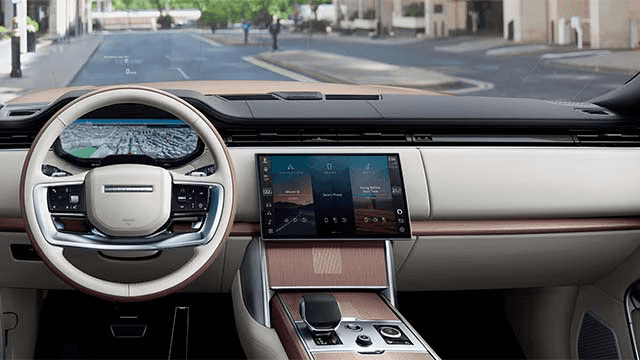
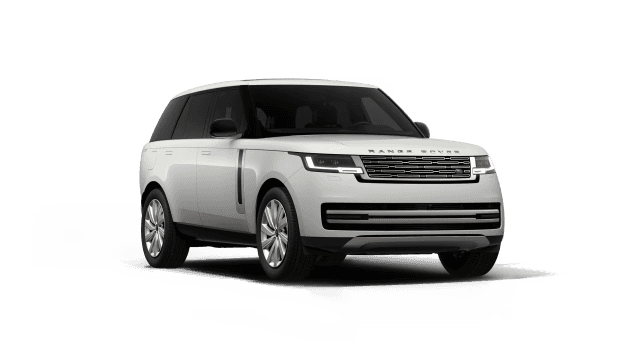
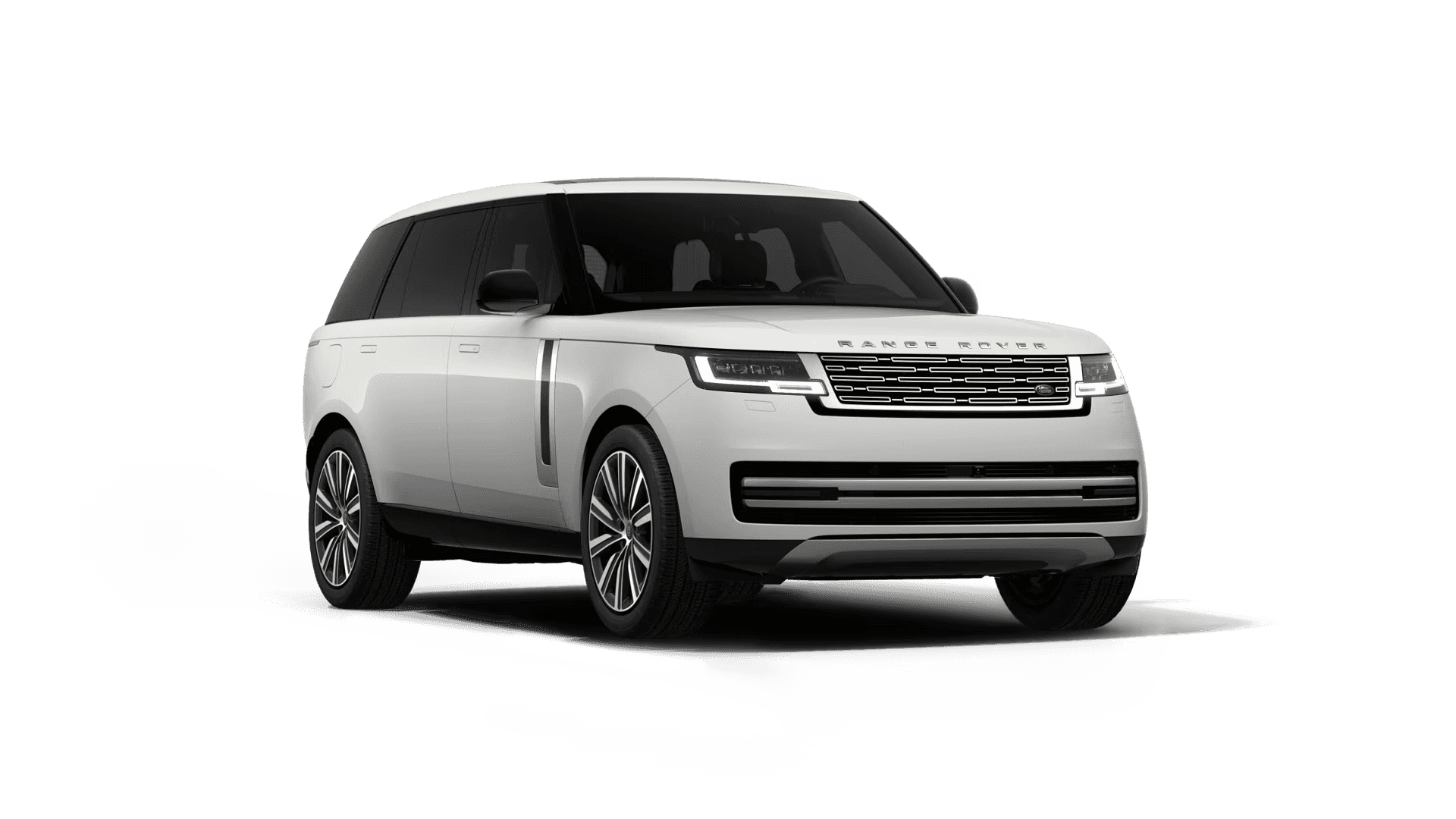
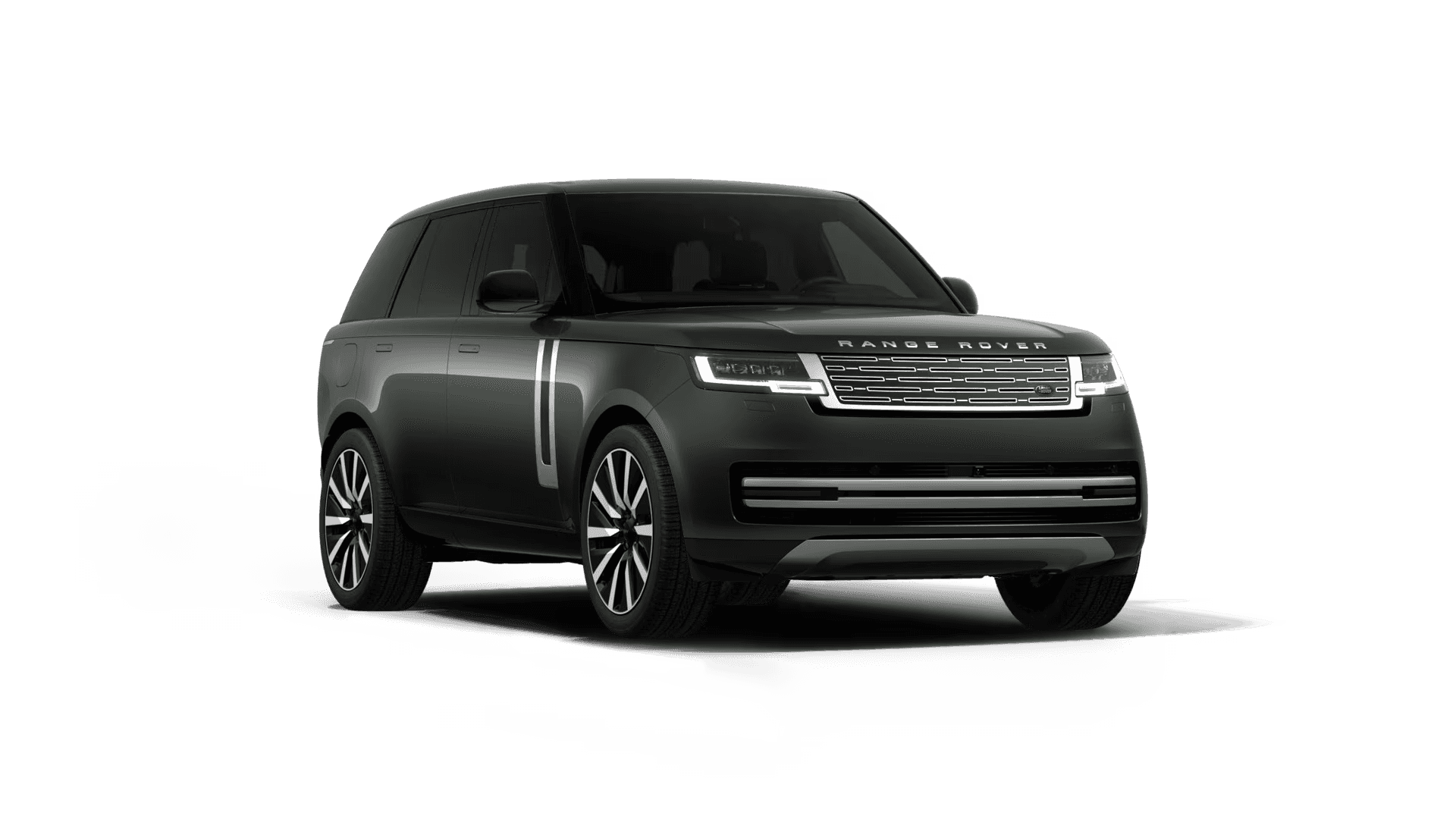
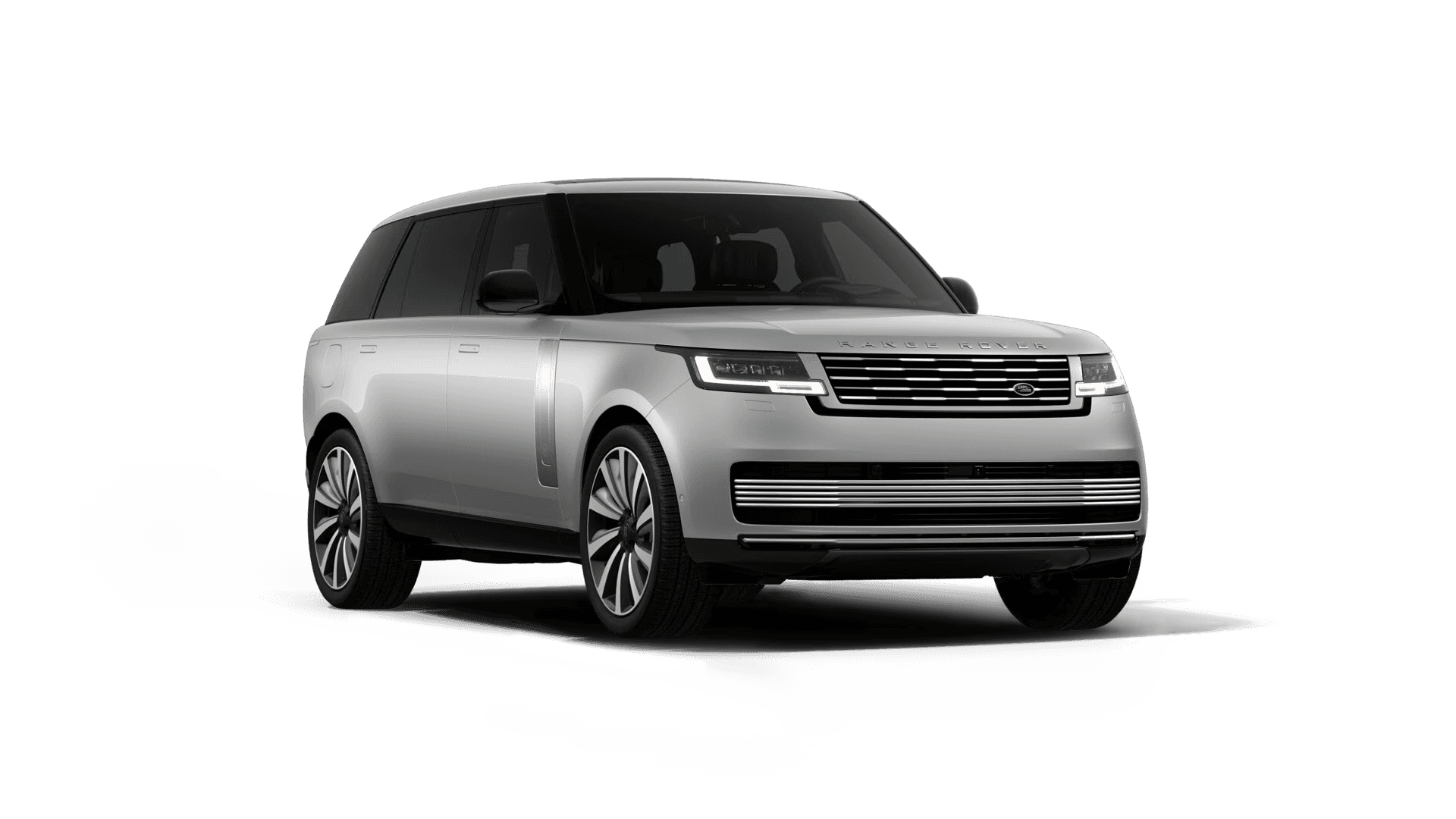
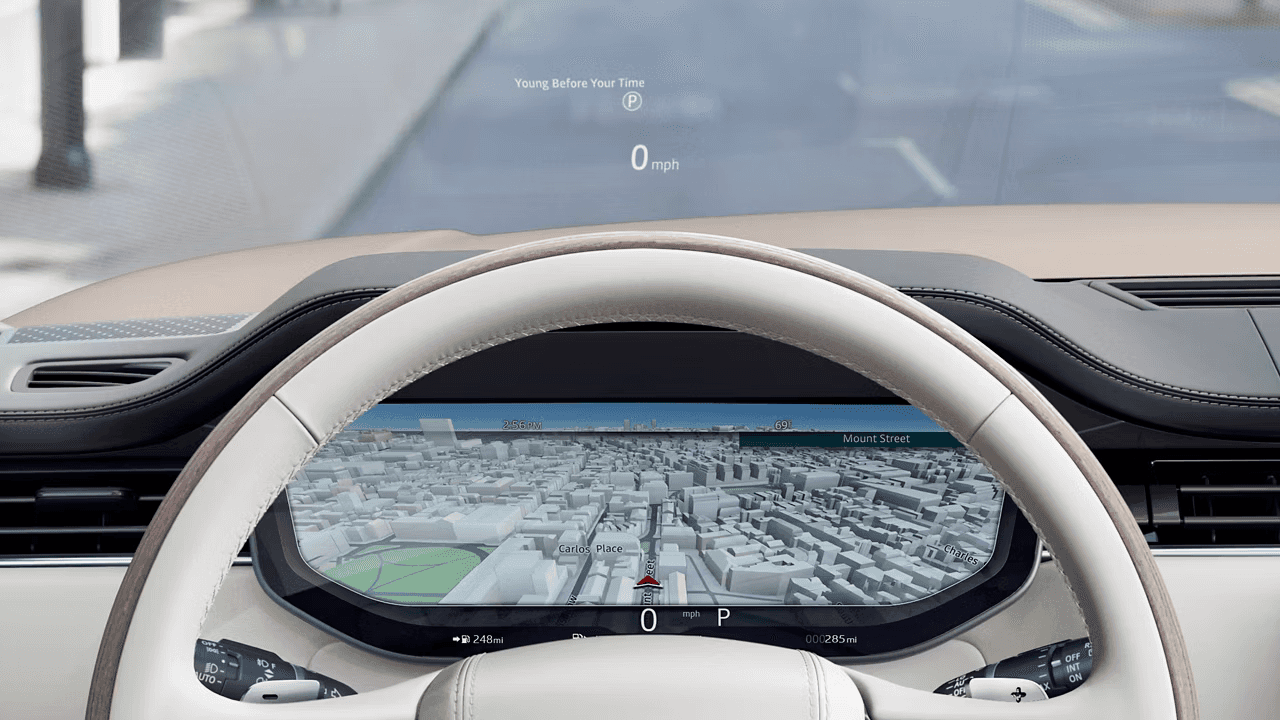
Adaptive Dynamics in the 2027 Range Rover reads body movement and steering inputs up to 500 times per second to continuously refine ride and handling. This page covers every driver assistance technology on the 2027 Range Rover, with notes on which models carry each system, plus available inventory.
2027 Range Rover full specifications
Real-World Benefit
For clients in the Houston and Friendswood area, the practical value of this system stack covers two distinct types of driving. On the highway network, All-Wheel Steering reduces the steering effort needed during lane changes, Adaptive Dynamics keeps the cabin settled over expansion joints and uneven pavement, and Lane Departure Warning provides an additional layer of awareness during longer drives.
In off-road or rural terrain, Terrain Response 2 manages adjustments to throttle, traction, and ground clearance based on the selected driving mode. Wade mode, the two locking differentials, and a maximum wading depth of 35.4 inches support appropriate water crossings within the published operating limits of the vehicle. Drivers should assess conditions carefully and should not enter flooded roads or moving water solely because the vehicle has a published wading depth.
Automated Parking handles tight urban parking without requiring the driver to steer, a meaningful convenience in denser areas around the region.
The optional 24-way power-adjustable front seats, while a comfort feature, also support precise and comfortable driver positioning.
System Integration
The assistance architecture in the 2027 Range Rover is defined by the integration between Adaptive Dynamics, All-Wheel Steering, Torque Vectoring by Braking, Electronic Air Suspension, and Terrain Response 2.
Adaptive Dynamics samples body movement, steering angle, and chassis acceleration at up to 500 times per second, while Electronic Air Suspension provides up to 11.5 inches of ground clearance in off-road mode. Maximum wading depth is 35.4 inches.
Where the Range Rover SE focuses on on-road refinement, the SV-tier models maintain the same assistance architecture while extending capability through powertrain output, with the 4.4-litre V8 producing 606 hp in SV specification. The assistance systems operate on the same underlying architecture across those configurations.
2027 Range Rover powertrain details
See the 2027 Range Rover at Land Rover Clear Lake
Every 2027 Range Rover in inventory carries the standard assistance suite as described above. Clients in Friendswood and across the greater Houston area can arrange a demonstration of Terrain Response 2, Adaptive Dynamics, and All-Wheel Steering through a scheduled appointment or a walk-in visit. The team at Land Rover Clear Lake can walk through each system in the context of the specific model and powertrain you are considering.
Frequently Asked Questions
What driver assistance systems come standard on the 2027 Range Rover SE?
Standard equipment on the Range Rover SE includes Adaptive Dynamics, All-Wheel Steering with Torque Vectoring by Braking, Electronic Air Suspension with Automatic Access Height, Terrain Response 2, Blind-Spot Alert, Lane Departure Warning, Surround View Camera, Rear Parking Sensors, Automated Parking, Hill Descent Control, Hill Launch Assist, two locking differentials, and five terrain modes including Wade mode.
How does Terrain Response 2 work on the 2027 Range Rover?
Terrain Response 2 uses a driver-selected mode to coordinate throttle mapping, transmission behavior, differential lock, and suspension height as a single package suited to the surface. Physical knobs (new for 2027) allow immediate selection without navigating a touchscreen. Five modes are available, including Wade mode for appropriate water crossings within the vehicle’s published limits.
What is the wading depth of the 2027 Range Rover?
The 2027 Range Rover is rated for a maximum wading depth of 35.4 inches. Wade mode in Terrain Response 2 prepares the powertrain and related vehicle systems for appropriate water crossings and is available on every model in the lineup.
Which models add Adaptive Off-Road Cruise Control?
Adaptive Off-Road Cruise Control is standard on the Range Rover First Edition, Range Rover SV, Range Rover SV Black, and Range Rover SV Ultra. It is not standard on the Range Rover SE or Range Rover Autobiography.
Does All-Wheel Steering affect the turning circle on the 2027 Range Rover?
Yes. All-Wheel Steering reduces the turning circle to 35.9 feet on a vehicle that is 199 inches long, by turning the rear wheels opposite to the front wheels at lower speeds. At higher speeds, the rear wheels turn in the same direction as the front wheels to improve stability.
How fast does Adaptive Dynamics sample suspension data?
Adaptive Dynamics monitors body movement, steering angle, and chassis acceleration at up to 500 times per second. It adjusts damper rates independently at each corner based on those readings, with no driver input required.
Is Automated Parking standard on all 2027 Range Rover models?
Automated Parking is included in the standard feature set across the 2027 Range Rover lineup, beginning with the Range Rover SE.