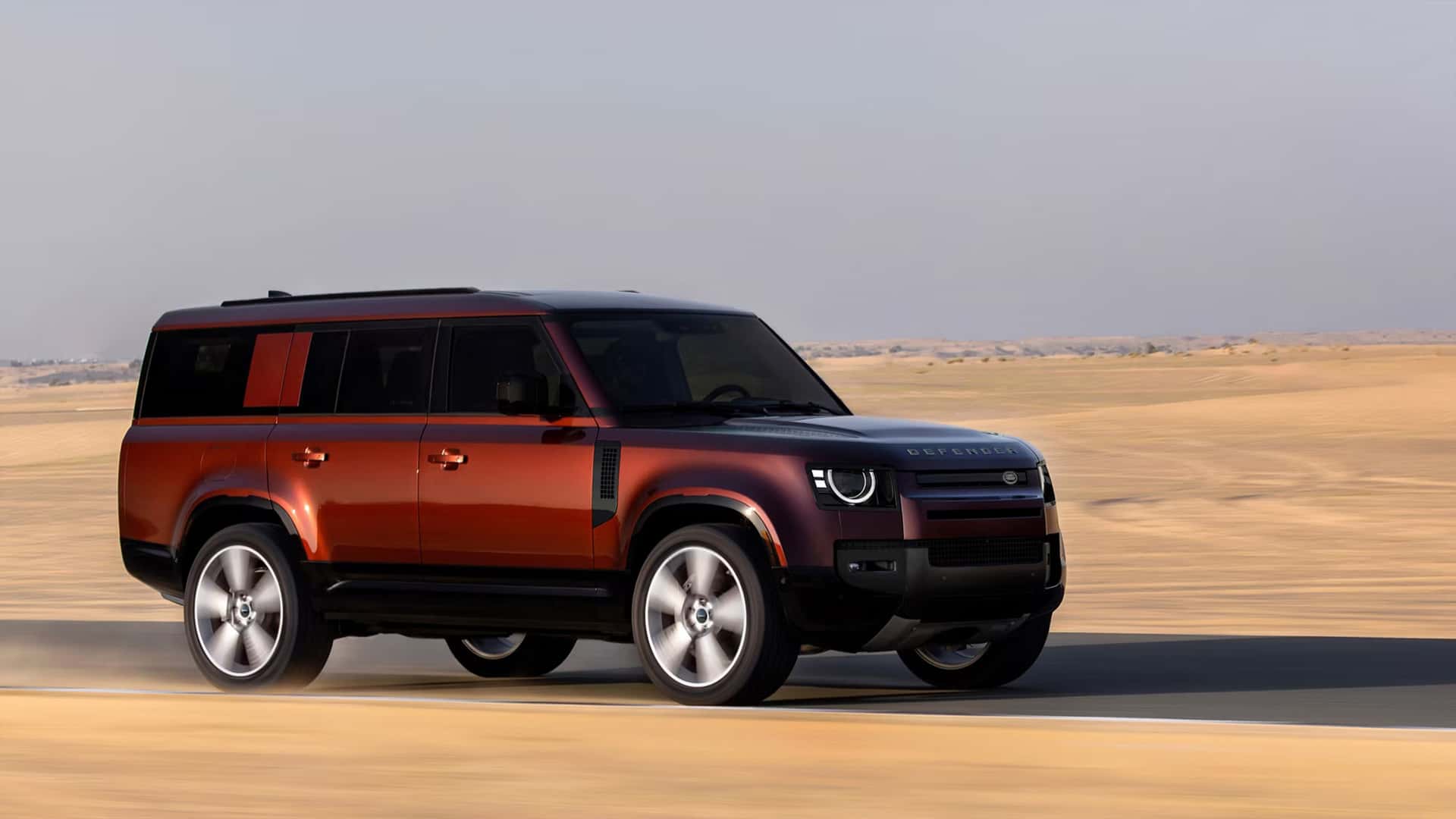
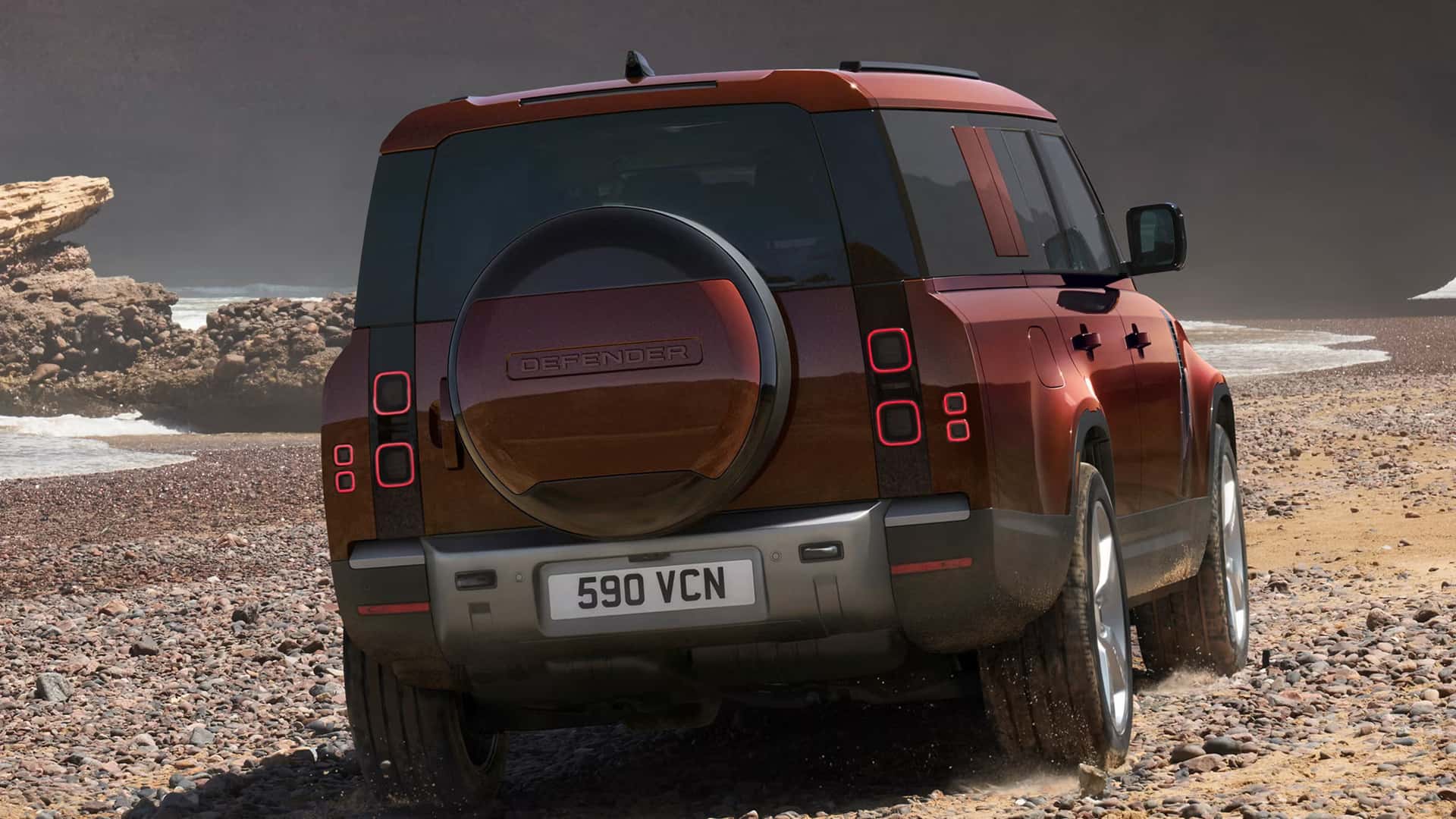
The 2026 Defender 130 includes Adaptive Off-Road Cruise Control, a system that manages throttle, braking, and wheel slip on uneven terrain automatically. Paired with Terrain Response 2 and up to 11.5 inches of ground clearance, it helps maintain controlled progress across technical terrain. This page covers how the system works, which models carry it, and what it means on real trails. View available Defender 130 inventory at Land Rover Clear Lake.
What Adaptive Off-Road Cruise Control Actually Does
Adaptive Off-Road Cruise Control is not a highway assist feature. It is a low-speed, terrain-focused system designed for conditions beyond the scope of conventional cruise control: rock ledges, rutted tracks, steep descents, and soft ground where the vehicle needs to maintain a controlled crawl.
The system holds a set low speed, typically between 1.8 mph and 18.6 mph depending on terrain, while independently managing each wheel’s braking and powertrain output to help limit wheel spin, loss of traction, or momentum stalls. The driver steers and remains responsible for observing the terrain and intervening when needed, while the system manages low-speed progress.
On a vehicle with 211.7 inches of total length carrying up to eight passengers, that is meaningful. Defender 130 is the longest body in the Defender family. Threading it through technical terrain while managing throttle modulation, downhill braking, and traction distribution simultaneously requires sustained attention. Adaptive Off-Road Cruise Control reduces that workload so the driver can focus more closely on line selection and steering inputs.
Full 2026 Defender 130 specs and model overview
How the System Works
Adaptive Off-Road Cruise Control operates as part of the broader Terrain Response 2 architecture. When the driver selects a terrain mode, such as rock crawling, mud and ruts, or grass, gravel, and snow, the system recalibrates its braking bias, throttle map, and stability thresholds to match that surface.
Once a crawl speed is set, the system uses wheel-speed sensors, 4WD transfer-case inputs, and data from the Electronic Air Suspension to adjust continuously. On a descent, it applies individual wheel braking to help control vehicle speed. On a climb, it directs torque to wheels that retain grip while modulating slip at the other wheels.
Defender 130 uses a 4WD system with a high- and low-range transfer case. In low range, the system can manage progress at speeds that allow precise intervention without the powertrain overrunning the brakes or the brakes overrunning the engine.
The Electronic Air Suspension raises ground clearance from 8.5 inches in standard driving mode to 11.5 inches in the off-road height setting. The two systems work together: the suspension provides additional clearance over obstacles, while Adaptive Off-Road Cruise Control manages progress at a controlled pace.
Terrain Response 2 technical documentation
Across the Models
The 2026 Defender 130 is offered in five models: P300 S, P400 X-Dynamic SE, P400 Outbound, P400 X, and P500 V8.
Adaptive Off-Road Cruise Control availability is tied to Terrain Response 2 fitment and, on some configurations, Electronic Air Suspension. Here is how capability is distributed across the range.
P400 X and P500 V8
The P400 X and P500 V8 models sit at the top of the Defender 130 lineup. Both carry the full suite of off-road technology as standard, including Terrain Response 2 with all five terrain modes, Electronic Air Suspension, and Adaptive Off-Road Cruise Control. The P400 X draws power from a 3.0L six-cylinder Twincharger mild hybrid producing 395 hp and 406 lb-ft of torque. The P500 V8 uses a 5.0L supercharged V8.
P400 Outbound
The P400 Outbound is positioned for clients who want a capable, expedition-ready Defender 130 without stepping to the full X specification. It includes Terrain Response 2 and is configured for adventure use. Adaptive Off-Road Cruise Control availability on the Outbound should be confirmed against the specific build, as optional fitment may apply.
P400 X-Dynamic SE
The P400 X-Dynamic SE offers a balance of luxury and technology. Terrain Response 2 is part of the package; Electronic Air Suspension may be optional depending on the build. Confirm Adaptive Off-Road Cruise Control fitment on the specific vehicle configuration.
P300 S
The P300 S is the entry model. It does not use the 3.0L Twincharger powertrain and may have a different off-road technology package. Clients who prioritize Adaptive Off-Road Cruise Control should look toward the P400 and P500 models.
Within the Defender range, “models” is the preferred term rather than “trims.” Each model represents a distinct configuration with its own technology, capability, and equipment hierarchy.
Compare Defender 130 models and specifications
What It Means for Owners Day to Day
Most Defender 130 clients will use the vehicle in two distinct ways: as an eight-passenger luxury SUV on paved roads in the Friendswood area and as an all-terrain vehicle on trips that call for the full capability of Defender 130.
For the second use case, Adaptive Off-Road Cruise Control changes the experience in a specific way. Technical off-road driving can be fatiguing. Managing throttle, brake bias, and traction simultaneously while watching the line and keeping passengers comfortable requires constant attention. On a long trail day, that fatigue accumulates.
Adaptive Off-Road Cruise Control reduces that cognitive and physical load on sections where wheel-speed management matters most. This allows the driver to devote more attention to navigation and line selection, supporting smoother and more considered progress.
For families using Defender 130 as a travel vehicle, the system also provides consistency. It can hold the same crawl speed throughout a trail section, helping reduce abrupt throttle inputs and sudden corrections while improving passenger comfort on rough ground.
The 73.7 cubic feet of maximum cargo capacity provides space for the equipment those trips require. With up to 8,200 lbs of towing capacity when properly equipped, Defender 130 also supports trailer use. Adaptive Off-Road Cruise Control complements that versatility by making technical, low-speed terrain more manageable.
EPA fuel economy data for the 2026 Defender 130
How It Differs From Hill Descent Control
Adaptive Off-Road Cruise Control is integrated with Terrain Response 2, the transfer case, suspension settings, and surface inputs. It adjusts based on the selected terrain mode and current vehicle conditions rather than controlling speed on descents alone.
A standard hill descent system applies braking to hold a speed on downhill gradients. Adaptive Off-Road Cruise Control also manages low-speed progress on climbs, side slopes, and technical traverses, adjusting throttle and braking as the grade and surface conditions change.
Defender 130 also offers the ClearSight rearview mirror on upper models, a 360-degree surround camera system standard across the 2026 Defender range, and blind-spot monitoring standard across all models. Off-road visibility is an important consideration on a 211.7-inch vehicle. These systems provide additional situational awareness when using Adaptive Off-Road Cruise Control, including in terrain where direct rear visibility is limited.
2026 Defender 130 technology and safety features
Find the Right Defender 130 Model at Land Rover Clear Lake
The P400 X and P500 V8 include Adaptive Off-Road Cruise Control and the full Terrain Response 2 package as standard. If the system is central to how you plan to use the vehicle, these models provide confirmed fitment and make the complete capability package available from the first drive.
Land Rover Clear Lake serves clients in Friendswood and across the surrounding area. Current new 2026 Defender 130 inventory is available now.
Frequently Asked Questions
What is Adaptive Off-Road Cruise Control on the 2026 Defender 130?
Adaptive Off-Road Cruise Control is a low-speed system that manages throttle, braking, and wheel slip automatically on uneven terrain. It allows the driver to concentrate on steering and line selection while the vehicle manages low-speed progress at approximately 1.8 mph to 18.6 mph. The driver remains responsible for observing conditions and intervening when necessary.
Which 2026 Defender 130 models include Adaptive Off-Road Cruise Control?
It is standard on the P400 X and P500 V8 models, which include the full Terrain Response 2 package and Electronic Air Suspension. Fitment on the P400 X-Dynamic SE and P400 Outbound depends on the specific build and options. The P300 S should be confirmed separately.
Does Adaptive Off-Road Cruise Control work with Terrain Response 2?
Yes. Adaptive Off-Road Cruise Control works within the Terrain Response 2 architecture. When a terrain mode is selected, such as rock crawling, mud and ruts, or sand, the system adjusts its braking and throttle strategy to match that surface.
How much ground clearance does the 2026 Defender 130 have?
Ground clearance is 8.5 inches in the standard driving mode and extends to 11.5 inches in the off-road height setting with Electronic Air Suspension. The increased clearance supports the terrain conditions where Adaptive Off-Road Cruise Control is most useful.
Can the 2026 Defender 130 tow while using its off-road systems?
Defender 130 is rated to tow up to 8,200 lbs when properly equipped. Off-road technology, including Terrain Response 2 and Electronic Air Suspension, supports trailering in a range of conditions. Adaptive Off-Road Cruise Control is designed for low-speed terrain management and operates separately from highway towing functions.
What is the difference between hill descent control and Adaptive Off-Road Cruise Control?
Hill descent control applies braking to hold a set speed on downhill gradients. Adaptive Off-Road Cruise Control also manages low-speed progress on climbs, side slopes, and technical traverses by adjusting throttle and braking as terrain conditions change.
How many passengers does the 2026 Defender 130 carry?
Defender 130 seats up to eight passengers across three rows. It is the longest body in the Defender family at 211.7 inches in total length and is designed to accommodate three full rows.
Contact Us Form Opened
Contact Us